Our recommendations are independently chosen. We may earn affiliate commissions from buying links. How we evaluate products
Supplements

Best Collagen Supplements of 2026: Dermatologists and Dietitians Weigh In

Your body loses about 1% of its collagen every year after 30. The right supplement can slow that down — but most products on the market won't.

Published Mar 14, 2026, 9:00am · Updated March 24, 2026
Rachel M.
Written By
Rachel M., Registered Dietitian
Dr. Sarah W.
Dr. Sarah W., Dermatologist
Expert Reviewed
Woman with healthy glowing skin

Key Takeaways

  • Hydrolyzed collagen peptides are the only form with meaningful clinical evidence — avoid "collagen boosters" that don't contain actual collagen
  • Type I and III collagen are most relevant for skin elasticity, joint comfort, and hair strength
  • Grass-fed, pasture-raised sourcing indicates cleaner processing standards
  • Results take 8-12 weeks of consistent use — collagen is a building material, not a quick fix

Starting around age 30, your body produces roughly 1% less collagen each year. By 50, most women have lost nearly a quarter of their total collagen — and the effects show up everywhere: thinner skin, deeper wrinkles, aching joints, brittle nails, and hair that just doesn't grow the way it used to. Collagen isn't a vanity ingredient. It's the most abundant structural protein in your body, and its decline is one of the most visible markers of aging.

The supplement industry knows this, which is why collagen products have exploded in the last few years. But here's the problem: the vast majority of them won't do anything meaningful. "Collagen boosters" that contain vitamin C and biotin but zero actual collagen? Marketing. Collagen from fish scales with no hydrolysis? Your body can't absorb it efficiently. Gummies with 2 grams of collagen per serving? Not even close to the clinically studied dose of 10-15 grams daily.

What the clinical evidence actually supports is hydrolyzed collagen peptides — collagen that's been enzymatically broken down into small peptides your gut can absorb. Specifically, Type I and Type III collagen, which account for roughly 90% of the collagen in your skin, bones, tendons, and hair follicles. The source matters too: grass-fed, pasture-raised bovine collagen generally indicates cleaner processing and fewer contaminants than mass-produced alternatives. After reviewing the current research and consulting with both dermatologists and dietitians, these are the five products we recommend.

Editor's Pick

NativePath Collagen Peptides

NativePath Collagen Peptides
  • Best for: Skin elasticity & joint support
  • Form: Powder (unflavored)
  • Type: Hydrolyzed bovine collagen (Type I & III)
  • Suggested use: 1-2 scoops daily
See Current Deal
On NativePath's Website

Why we picked this: Multiple clinical trials now support hydrolyzed collagen peptides for measurable improvements in skin elasticity and hydration, particularly in women over 40. The mechanism is straightforward: your body breaks collagen peptides into amino acids (primarily glycine, proline, and hydroxyproline) that serve as building blocks for new collagen synthesis in the dermis. It's not magic — it's giving your body the raw materials it needs for a process that's slowing down with age.

NativePath uses grass-fed, pasture-raised bovine collagen — Type I and Type III, which are the most relevant types for skin, joints, hair, and nails. The ingredient list is genuinely clean: just collagen peptides. No fillers, no artificial sweeteners, no unnecessary additives. It dissolves completely in coffee, smoothies, or water with zero taste or gritty texture, which matters more than people think — if a supplement tastes bad, you'll quit within two weeks.

The critical thing to understand about collagen: it's a building material, not a drug. You need 8-12 weeks of consistent daily use (10-15g) to see meaningful results. Most people who say "collagen doesn't work" either took too little, used a non-hydrolyzed form, or gave up after three weeks. NativePath delivers the right form, the right dose, and makes it easy enough to stick with daily. That combination is why it's our top pick.

Best for Skin Energy

NativePath CoQ10 Complex

NativePath CoQ10 Complex
  • Best for: Cellular energy for skin repair
  • Form: Softgel capsule
  • Key ingredient: Ubiquinol (active CoQ10)
  • Suggested use: 1 softgel daily with food
See Current Deal
On NativePath's Website

Why we picked this: Think of it this way: collagen provides the building materials, but CoQ10 provides the energy for the construction crew. Your skin cells turn over constantly, and that regeneration process requires significant cellular energy. CoQ10 (specifically ubiquinol, the active form) is essential for mitochondrial energy production in every cell in your body — including the fibroblasts in your dermis that actually produce new collagen.

Here's the problem: by age 50, you may have 50% less CoQ10 than you did at 20. That's a massive drop in the energy available for skin repair, collagen synthesis, and cellular defense against oxidative damage. Most budget CoQ10 supplements use ubiquinone, which requires a conversion step that becomes less efficient with age. NativePath uses ubiquinol — the already-converted, bioavailable form — bypassing that bottleneck entirely.

Pairing CoQ10 with collagen addresses the skin aging equation from both sides: you're supplying the structural protein your skin needs AND the cellular energy required to incorporate it. Women on statin medications should pay particular attention here — statins are known to deplete CoQ10 levels, which may contribute to the fatigue and muscle discomfort some patients experience. Take with food for best absorption, as the fat content improves ubiquinol uptake.

The Collagen + CoQ10 Stack: Collagen gives your body the raw protein building blocks. CoQ10 gives your cells the energy to actually use them. It's the difference between delivering lumber to a construction site and delivering lumber plus a crew with power tools. For women over 40 experiencing visible skin changes, this combination addresses both the material deficit and the energy deficit simultaneously. Take collagen in your morning coffee, CoQ10 with breakfast or lunch (with food for absorption).

Best for Gut-Skin Axis

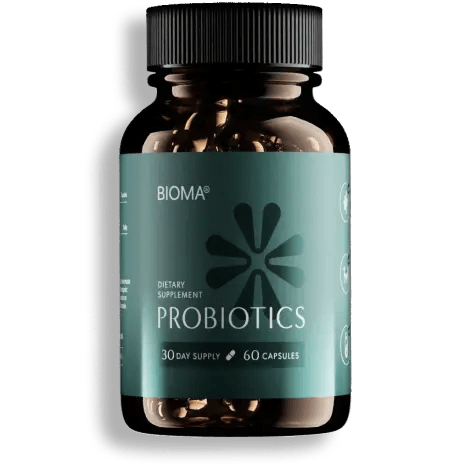
Bioma Probiotics

Bioma Probiotics bottle
  • Best for: Gut health supporting skin quality
  • Form: Capsule
  • Key feature: Targeted-release technology
  • Suggested use: 1 capsule daily
See Current Deal
On Bioma's Website

Why we picked this: The gut-skin axis is one of the most exciting areas of dermatological research right now. The connection is increasingly well-documented: gut inflammation doesn't stay in the gut — it triggers systemic immune responses that manifest as skin dullness, accelerated aging, acne flares, rosacea, and eczema. A growing number of dermatologists now assess gut health before prescribing topical skin treatments, because addressing the root cause often produces better outcomes than treating the surface symptoms alone.

Bioma's multi-strain probiotic formula uses targeted-release technology to bypass stomach acid and deliver beneficial bacteria directly to the intestines. This matters because most probiotic supplements are destroyed before they reach the gut — making them expensive placebos. The specific strain selection targets gut diversity, which research links directly to skin barrier function and inflammatory markers.

This is not a replacement for collagen — it's a powerful complement to it. Collagen provides the structural building blocks; a healthy gut ensures your body can actually absorb and utilize those building blocks efficiently. If you're taking collagen and not seeing the results you expected, poor gut health may be the bottleneck. Fix the gut, and collagen supplementation becomes significantly more effective.

The gut-skin axis research is still relatively young, but the trajectory is compelling. Multiple studies have demonstrated that women with greater gut microbiome diversity show measurably better skin hydration, elasticity, and fewer inflammatory skin conditions. The mechanism appears to involve the gut barrier: when it's compromised (through poor diet, stress, antibiotics, or dysbiosis), inflammatory compounds leak into the bloodstream and trigger immune responses throughout the body — with the skin often being the most visible casualty. Addressing gut health alongside collagen supplementation may be the most complete approach to skin aging from the inside out.

Best for Scalp & Hair

Scalpistry

Scalpistry
  • Best for: Scalp health & hair growth
  • Form: Topical treatment
  • Key feature: Scalp-targeted formula
  • Suggested use: As directed
See Current Deal
On Scalpistry's Website

Why we picked this: Collagen supports hair from the inside — providing amino acids that contribute to keratin production and follicle strength. But for women noticing thinning at the crown or temples (particularly after 45), there's a local environment factor that internal supplements alone can't fully address: the scalp itself. Follicle health depends on blood flow, sebum balance, and the absence of inflammatory buildup at the scalp surface.

Scalpistry takes a topical approach, targeting the follicle environment directly. This is the "outside-in" complement to collagen's "inside-out" approach. For women dealing with hormonal hair changes — particularly during perimenopause and menopause, when shifting estrogen levels can affect hair growth cycles — combining internal collagen supplementation with targeted scalp care represents the most complete strategy we've seen.

This isn't an either-or choice with collagen. Internal supplementation builds the protein infrastructure; topical scalp treatment optimizes the environment where that protein gets deployed. The women who see the best hair results tend to address both simultaneously rather than relying on one approach alone.

Best for Hair Strength

Moerie Hair Growth Pills

Moerie Ultimate Hair Growth Pills
  • Best for: Internal hair nutrition
  • Form: Capsule
  • Key feature: Hair-targeted vitamin blend
  • Suggested use: As directed
See Current Deal
On Moerie's Website

Why we picked this: While collagen provides the protein building blocks for hair structure, it doesn't address every nutritional factor involved in the hair growth cycle. Thinning hair is often multifactorial — protein deficiency is one piece, but vitamin and mineral deficiencies (particularly iron, biotin, zinc, and vitamin D) can independently slow hair growth, weaken the hair shaft, and accelerate shedding.

Moerie takes a targeted nutritional approach, supplying the specific vitamins and minerals most commonly associated with hair growth and retention. For women whose hair concerns go beyond what collagen alone addresses — particularly if blood work has revealed nutritional gaps — this fills a different part of the equation. Collagen provides the amino acid scaffolding; Moerie provides the micronutrient cofactors that support the growth cycle itself.

If hair is your primary concern and you're choosing between this and collagen, start with collagen (it addresses the most common deficit). Add Moerie if, after 8-12 weeks, you want more targeted hair support or if you suspect nutritional deficiencies are contributing to the problem. For the most comprehensive internal approach to hair, using both together covers protein building blocks and growth-cycle micronutrients simultaneously.

Quick Comparison

SupplementBest ForFormDaily Use
NativePath CollagenSkin elasticity & jointsPowder1-2 scoops
NativePath CoQ10Skin energy & repairSoftgel1x daily
Bioma ProbioticsGut-skin axisCapsule1x daily
ScalpistryScalp & hairTopicalAs directed
Moerie Hair GrowthHair strengthCapsuleAs directed

How We Evaluated These Supplements

We evaluated each collagen and skin health supplement based on four criteria: clinical evidence supporting the specific ingredients and forms for skin, joint, and hair benefits, bioavailability and absorption (hydrolyzed peptides vs. intact collagen, ubiquinol vs. ubiquinone), ingredient transparency and sourcing standards (grass-fed, third-party tested, clean labels), and aggregated customer reviews across multiple platforms with attention to 8-12 week usage patterns. We excluded products using proprietary blends without disclosed dosages, non-hydrolyzed collagen, "collagen boosters" that contain no actual collagen, and products with clinically insignificant doses.

The Bottom Line

You don't need all five of these products. The right combination depends on your primary concern. If skin elasticity and joint comfort are driving you here, NativePath Collagen Peptides is the foundation — it's the single most impactful supplement on this list. If you want to maximize skin results, add CoQ10 for the cellular energy boost. If your gut health is questionable (bloating, inflammation, skin that doesn't respond to topical treatments), Bioma addresses that root cause. And if hair is your main focus, Scalpistry and Moerie target that concern from complementary angles.

If you're starting fresh and want the strongest foundation, begin with NativePath Collagen. Take 1-2 scoops daily in coffee, a smoothie, or water — it's unflavored and dissolves completely. Give it a full 8-12 weeks before evaluating. This isn't a supplement that works overnight; it's providing building materials for a biological process that takes time. Most people who say collagen "didn't work" either used the wrong form, took too little, or didn't give it long enough. The clinical data is clear: hydrolyzed collagen peptides, taken consistently at adequate doses, produce measurable improvements in skin hydration, elasticity, and wrinkle depth.

From there, layer based on your priorities. CoQ10 for energy and repair. A probiotic for gut-skin optimization. Topical scalp care or hair nutrition if that's your focus. But the collagen comes first — it's the structural foundation that everything else builds on.

"Collagen loss is one of the most significant factors in visible skin aging, and it's one of the few we can actually influence with supplementation. The clinical data on hydrolyzed collagen peptides is robust — consistent daily use produces measurable improvements in skin hydration and elasticity within 8-12 weeks. But the form matters. Not all collagen supplements are created equal, and most of what you'll find on pharmacy shelves is underdosed or poorly absorbed."

— Dr. Sarah W., Dermatologist
Our #1 Pick

NativePath Collagen Peptides

The top-scoring collagen supplement in our evaluation — hydrolyzed Type I & III peptides from grass-fed, pasture-raised bovine. Dissolves clean, tastes like nothing, clinically backed.

See Current Deal
On NativePath's Website · Affiliate link
Rachel M.
Rachel M., Registered Dietitian Staff Writer Rachel is a registered dietitian with a background in clinical nutrition and over eight years of experience reviewing supplements and health products. Her work focuses on women's wellness and evidence-based nutrition, with a particular interest in metabolic health after 40.
Dr. Sarah W.
Dr. Sarah W., Dermatologist Medical Reviewer Dr. Sarah is a board-certified dermatologist with over 15 years of clinical experience in women's skin health and aging. She specializes in the intersection of nutrition and dermatology and reviews our health content to ensure it meets clinical standards.